

PEAT-GENIE project turns environmental data into support for peatland restoration
27.10.2026
The four-year project is developing an AI-assisted platform to support restoration professionals, landowners and decision-makers in planning peatland restoration. Funded by the Horizon Europe programme, the project involves 20 partners from 10 European countries.
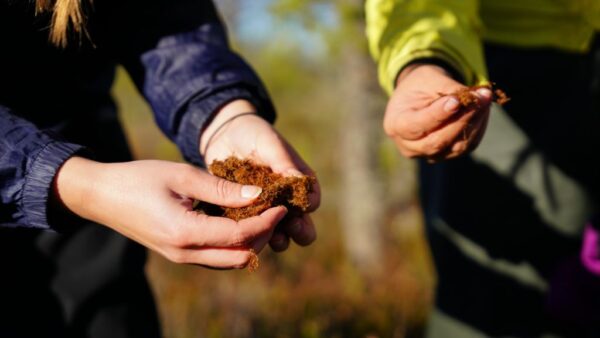
Peatlands are important for the climate, water and biodiversity. Yet decisions about their management and restoration are rarely simple, because the available environmental data can be difficult to combine and interpret. Relevant European data and models for restoration already exist, but they are often dispersed across different systems and presented in forms that require specialist expertise.
PEAT-GENIE project was created to address this problem. The four-year project, launched in September 2026, aims to make complex environmental information easier to use in practical decision-making.
“The question behind PEAT-GENIE is simple: how can we make the large amount of available environmental data and modelling expertise genuinely useful for the people making restoration decisions?” says Fahimeh Farahnakian, Senior Researcher and PEAT-GENIE’s Scientific Lead at the Geological Survey of Finland (GTK).
PEAT-GENIE focuses on four connected peatland themes: hydrology, greenhouse gas emissions, biodiversity and land cover. The project’s main result will be a web-based platform that combines existing environmental data, digital twins, artificial intelligence and generative AI. The platform will allow users to examine the possible impacts, such as expected benefits, risks and trade-offs, of different peatland management and restoration options before decisions are made in practice.
“We want to build a tool that brings different environmental impacts into the same view and presents them in a form that people can use. Although peatlands are the project’s focus, the platform is built to be applicable for other environmental decision-making too,” says Farahnakian and continues:
“While the platform won’t make decisions for its users, it will give them easy-to-understand, visual and data-backed support.”
End-users involved from the beginning
End-user engagement is essential in PEAT-GENIE: the project will involve the platform’s potential end-users throughout the development process to identify practical needs and improve it based on feedback. This is intended to ensure that technical development remains connected to the decisions users face in their work.
The platform will be tested and validated in Denmark, Estonia, Finland and Ireland before being made openly available.
“These four countries provide different peatland types, conditions, management strategies and governance contexts. Testing across them is intended to show that the PEAT-GENIE platform is transferable beyond one location and relevant at the European level”, Farahnakian explains.
During the first phase of the project, the partners will concentrate on user requirements, data harmonisation and the technical foundation of the platform. The work will proceed from data and model development to integrated tools and testing. By the end of the project, PEAT-GENIE will produce guidance, policy briefs and good practices for environmental management, in addition to the platform.
The project is coordinated by GTK and runs from September 2026 to August 2030. Its approximately EUR 8.8 million budget is funded through the European Union’s Horizon Europe research and innovation programme. The consortium comprises 20 partners from 10 European countries, including research organisations, universities, public authorities, non-governmental organisations and small and medium-sized enterprises.